get moving
Pain is tricky, and the fear of making it worse stops many from healing.
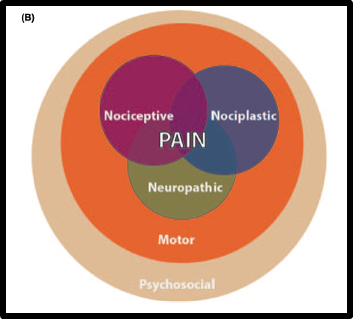
We help clients past this mental barrier by educating them on the different TYPES of pain, what causes them, and how they need to approach each one to ensure continued gain of function.
Neuropathic pain comes from nerve damage and is the most commonly felt type of pain for clients when practicing joint repair.
Neuropathic pain can manifest as a dull ache in the muscle that comes and goes, a chronic "hot spot" or trigger point, a sharp line, an uncomfortable tingling sensation, and several others.
There are two VERY important things to understand about neuropathic pain:
1) It is NOT necessarily indicative of damage to connective tissues - ligaments, cartilage, etc.
2) In nearly all cases it can be traced to chronic, involuntary contraction of the neighboring muscles.
Why such chronic contractions occur is varied - previous injury, guarding, overuse, neglect, incomplete rehab, etc.
Ultimately it doesn't matter why, though, because the effect is the same - putting the local sensory nerve under constant pressure and prompting it to signal distress, which we call "pain."
If this pattern sets in long enough, it can harden the fascia surrounding the nerver enough to damage and even atrophy it.
That's right. If you don't intervene and release the contraction, your body will literally shrink the nerve to shut off the muscle and avoid more pressure. This "works", but at the cost of diminishing the muscle's ability to voluntarily contract, which in time will lead to muscle atrophy as well.
This is not a good tradeoff.
The solution, instead, is to further engage the chronically contracted muscle but through a lengthened position - aka "eccentric contraction."
This prompts the muscle to relax/release after you let go of the tension, which is its natural state.
Immediately follow this up with targeted massage/myofascial release on or near the sensitive area. This breaks down fascial adhesions around the distressed nerve, further relieving compression and restoring controlled engagement of motor signals.
Think of clearing a traffic jam and watching the cars drive through again:

This is what working with neuropathic pain is like, and the big takeaway is that you can't avoid it.
You MUST work with it and know you're NOT going to cause yourself deeper damage to connective tissues.
Getting rid of neuropathic pain isn't the end, though. It's the beginning.
Once you've successfully healed a significant portion of your neuropathic pain, then we have to go deeper to resolve your nociceptive pain, which we'll talk about next week.
-Coach Seanobi, BS, CSCS, CEP, CPT
P.S. - Whenever you’re ready, here are two ways I can help you:
1) FREE Movement Strategy Call
Sick and tired of joint pain keeping you from your favorite movements? You’re likely closer to the solution than you think IF you can make some key changes to your lifestyle and training. You know who can help you do that faster than anyone? A coach who's been there. Book a free consultation with me and let's chart the path forward together. Click here to schedule now.
2) Join The Joint Repair Forum. Our Facebook Group for individuals to learn, share, and collaborate on all things Joint Repair. Ask me a question and I'll ACTUALLY ANSWER IT. Join today!